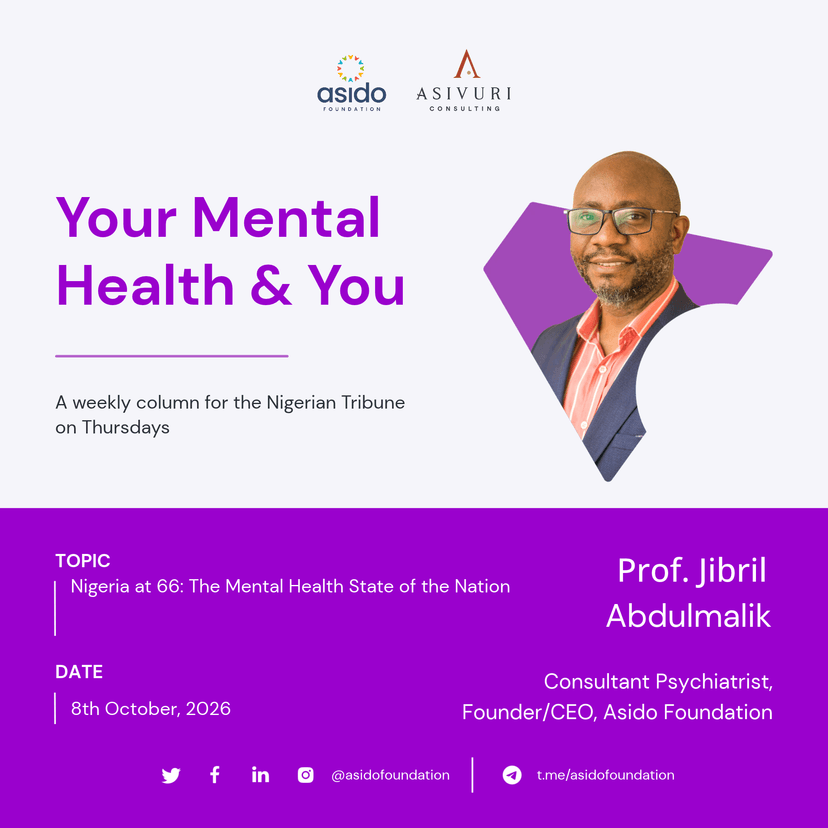
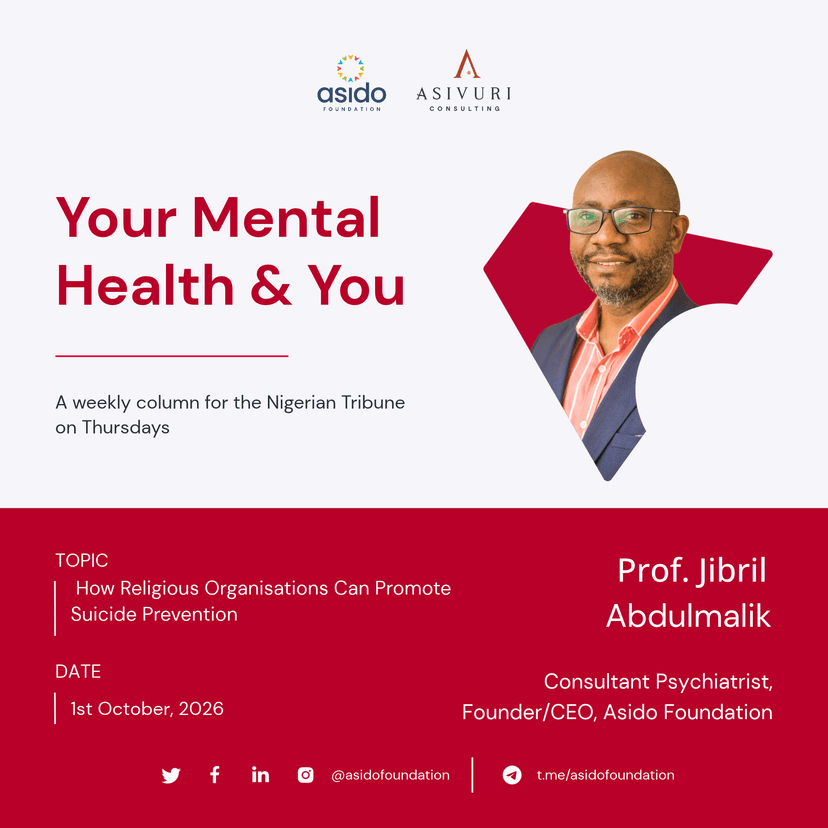
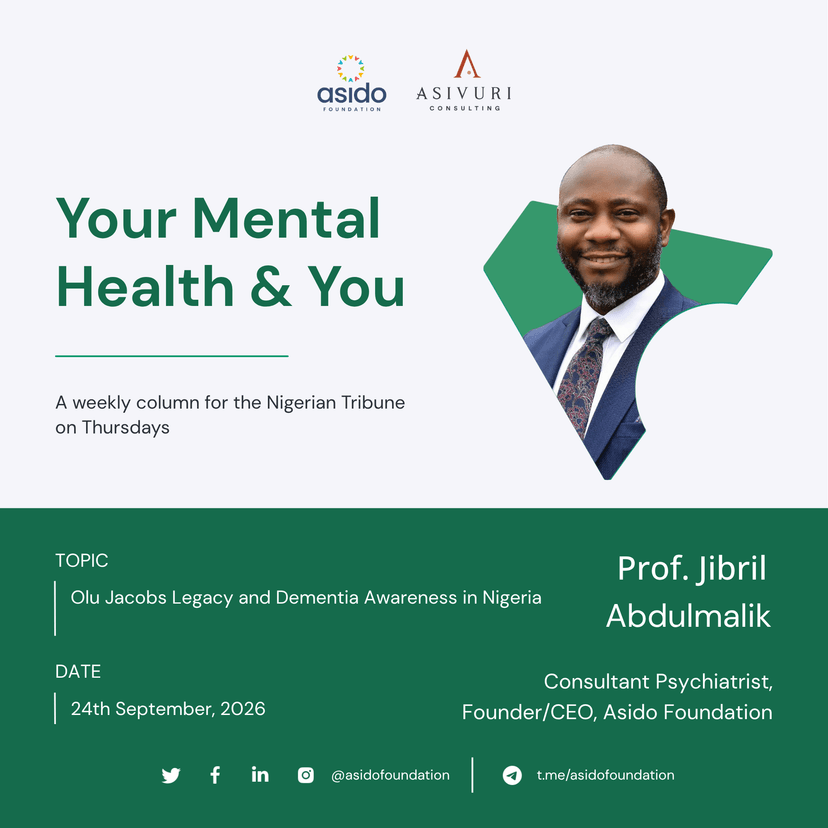
According to the World Health Organization, more than a billion people globally live with a mental health condition. Mental disorders make up 10% of the global burden of disease. Mental illness, suicide, and drug abuse continue to increase globally, with a higher level of increase in youthful countries like Nigeria. In Nigeria, over 50 million Nigerians are at risk of developing a mental health condition. Despite this increasing burden of mental illness in Nigeria, only 3% of the total health budget is allocated to mental health, and this amount is often not disbursed. Many people living with mental illness continue to hide, are chained, or face stigmatization due to ignorance and lack of access to mental healthcare.
The socioeconomic costs of mental illness worsens the already high levels of poverty and inequality in Nigeria. The high cost of mental healthcare is a result of multiple factors including the low number of qualified mental healthcare professionals, the lack of insurance coverage for mental healthcare, and the lack of integration of mental healthcare in the primary healthcare (PHCs) system.
Despite the different challenges in the mental health landscape in Nigeria, there is hope in the rising innovations in care, and a growing culture of collaboration among different stakeholders. With stronger community engagement and inclusion, mental health care and support will become strengthened. We have to tap into these innovations and leverage on available strengths to improve the future of mental health in Nigeria.
Innovations: The rising trend of digital and technology-based solutions have proven effective in improving mental health advocacy and care. Technology is improving early detection of mental health struggles through the increased availability of mental health knowledge and skills. Digital platforms have also proven beneficial in training multiple stakeholders and individuals on mental health, psychological first aid, and community support.
Community: Community has always been a core part of Nigeria's culture and it is a strength that has to be tapped into for optimal mental health for all. Community-based peer support groups, especially among youths with lived experiences of mental illness provide safe spaces for people, and have been transformative for reducing stigma. The Asido Foundation has emphasised community through many of our projects including Asido Campus Network and SUCCEED Africa, a community-based mental health care. Our indigenous healing traditions and practiceswhen properly integrated with evidence-based care reduce barriers to stigma and promote optimal mental health for all. Community is an essential protective and sustaining factor for mental health.
Inclusion: Mental illness is no respect of gender, background, socio-economic status, ethnicity, religion or academic qualifications. Our approach to mental health must be inclusive and be for all Nigerians to promote access, care and support. Inclusion also means supporting the specific needs of vulnerable populations such as persons with disabilities, internally displaced persons, survivors of different traumatic events, and those in rural areas who are often marginalized from access to quality healthcare. Inclusion of mental health must be widespread and evident in our workplaces, school curricula, and religious places. Mental health should be a public service and not a privilege for a select few.
Collaboration: Sustainable progress for the future of mental health in Nigeria requires collaboration across all sectors. With collaborative efforts between government, healthcare professionals, NGOs, religious leaders, universities, international partners, technology innovators, corporate organisations, and the general public, mental health can be destigmatized and care reinforced.
The Asido Foundation is charting a new path for mental health in Nigeria that emphasizes all these with the 3rd International Mental Health Conference and Jemila Abubakar Memorial Essay Competition Award Ceremony holding on the 25th and 26th February, 2026 at the International Conference Centre, University of Ibadan. This conference is going to be a gathering of people from diverse backgrounds for a sustainable future in mental health in Nigeria. The conference will include activities such as:
- Keynote Address
- Project HOPE Documentary Screening
- Jemila Abubakar Memorial Essay Competition Award Ceremony
- Investiture of Notable Personalities as Patrons and Ambassadors of Asido Foundation
- Plenary Session by Prof Eóin Killackey from Orygen, Australia
- Mental Health First Aid training
- Mental Health Workshop for Religious Leaders
- Oral and poster presenters of research, project, and visual arts
- And many more.
The two-day event is part of ongoing efforts to drive knowledge sharing and action in the mental health landscape in Nigeria. It is a free and publicly accessible event and we invite everyone in Nigeria to attend and support the event as we collaborate to change the mental health landscape in Nigeria.
For more details, see our contact details below:
Website: www.asidofoundation.com Email: asidofoundation@gmail.com; Phone: 0907 772
7586; 0818 0777 458; 0807 3839 840
Like and follow our Social media handles: Facebook:
Asido Foundation; Instagram & Twitter: @asidofoundation; Join our Telegram Community via
http://t.me/asidofoundation for monthly interactive and educational sessions on everything
mental health.